LatestGuides
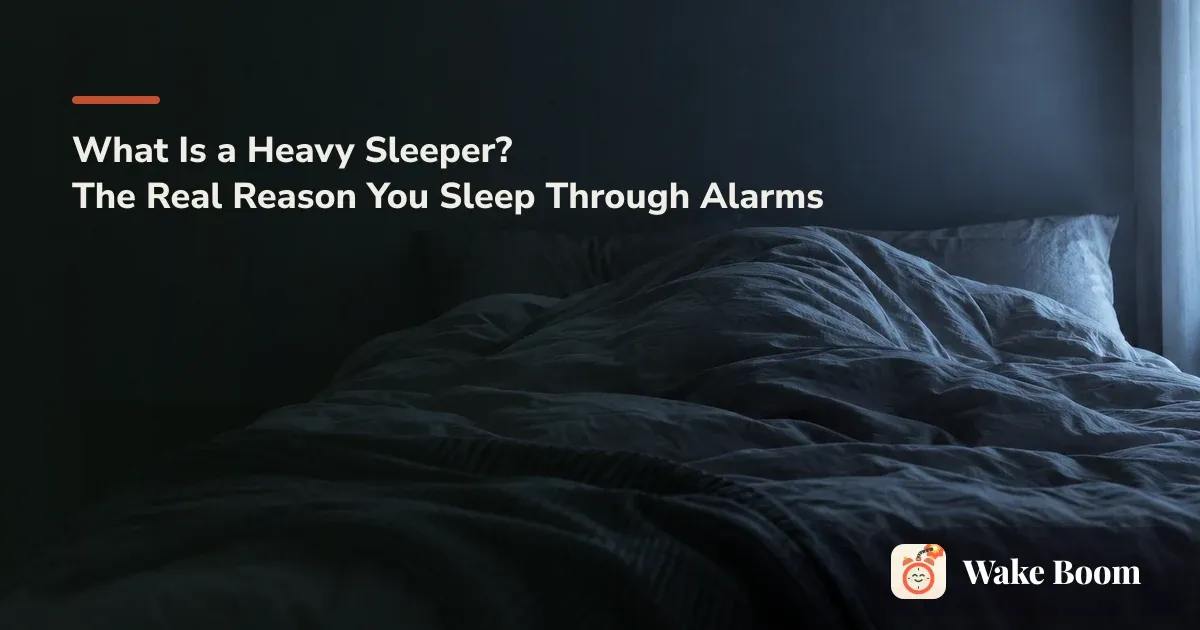
What Is a Heavy Sleeper? The Real Reason You Sleep Through Alarms
A heavy sleeper has a high arousal threshold — but sleep debt, timing, and alcohol shape it as much as genes. Here's what you can change.
Read the postThe Wake Boom blog
Sleep science you can use, honest product notes, and the occasional confession from the people building an alarm you can't out-argue.
A heavy sleeper has a high arousal threshold — but sleep debt, timing, and alcohol shape it as much as genes. Here's what you can change.
Read the postSmart alarm vs regular alarm: which wakes you up less groggy, which is more reliable, and how to pick one for a hard start time.
A barcode alarm won't turn off until you scan a code across the room. How the scan-to-dismiss trick works, how people cheat it, and where it breaks.
Build a consistent wake-up routine around one fixed wake time your life already sets — plus a weekend cap and a Daylight Saving plan.
Chronic oversleeping is regularly sleeping past 7-9 hours and still waking tired. Learn the self-check, causes, and when to see a doctor.
Waking up on time means two things at once: on time for your job's clock and for your body clock. Here's the difference and how to close the gap.
Not just 'across the room.' Tune five placement variables to your room so the alarm gets you upright: distance, height, side, walk-path, and device.
A loud bedside alarm rarely harms hearing at normal volume and distance. Here's what actually matters — plus iPhone and Android settings to fix it.
Sleep inertia usually lasts 15 to 30 minutes, but yours depends on your sleep stage, sleep debt and timing. Here's how to shorten it this morning.
Alarm clock vs. alarm app, decided by how you fail to wake up — sleep through it, kill it half-asleep, or doomscroll after.
Snooze silences an alarm, usually for nine minutes, then rings again; dismiss ends it. Since iOS 26, iPhone lets you set 1 to 15 minutes per alarm.
What an alarm app is, how it differs from your phone's built-in Clock, and how to pick one that actually gets you out of bed.
Groggy or actually short on sleep? Sleep inertia fades in 20 minutes; sleep deprivation takes a week. How to tell which one hit you at 6 a.m.
Adults need 7–9 hours of actual sleep, not time in bed. The full guideline, why deep sleep is an output, and a two-week way to find your number.
Sleep inertia is the groggy, impaired window right after waking. Learn its causes, symptoms, how long it lasts, and when morning grogginess signals more.
Not the loudest — the least familiar, and lower-pitched than you think. What the waking research says, which sounds to pick, and how to rotate them.
What sleep inertia is, how long it lasts, and nine evidence-informed ways to shorten it — including the alarm choice most people get backwards.
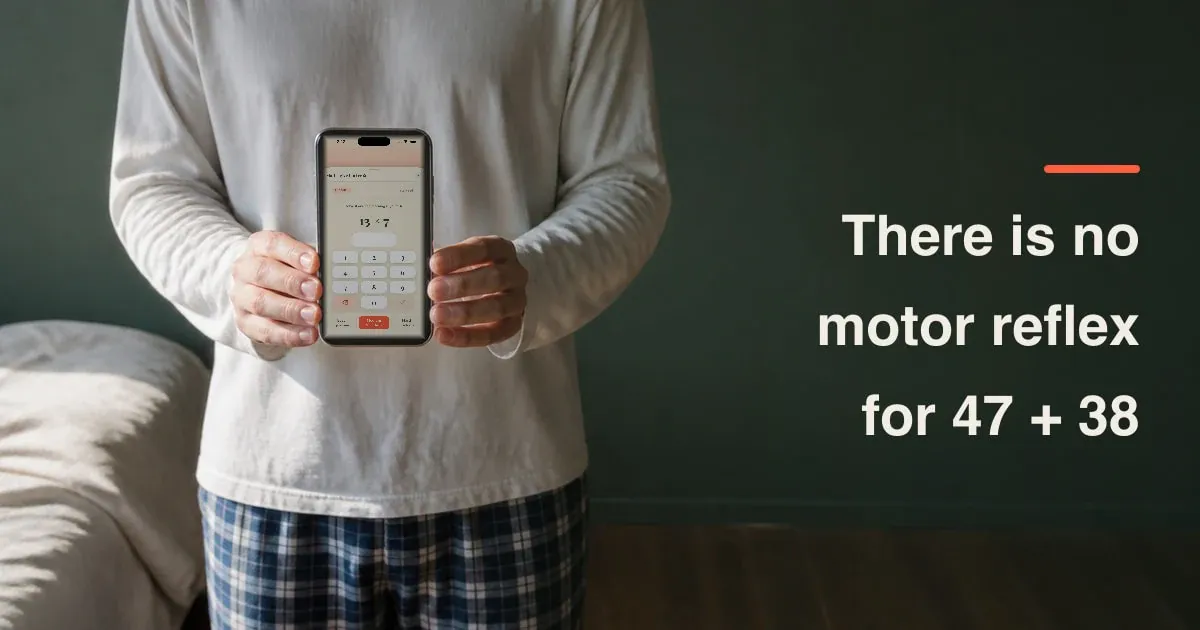
What arithmetic actually does to a waking brain, what the research does and doesn't show, the two cases where math missions fail, and how to set one up.
Seven escalating upgrades — sound, placement, vibration, enforcement, missions — plus the phone settings and hardware most guides never mention.
Eight changes that end the snooze habit — made the night before, when the version of you with standards is still in charge. Plus what to do if they fail.
It's not laziness — it's the sleepiest part of your brain deciding. Why the snooze tap happens, what the research actually says, and what stops it.
Arousal threshold, deep sleep, habituation, sleep debt, a late body clock — plus the medical causes worth ruling out, and what reliably gets through.
Why Wake Boom makes you earn silence — and how streaks, blooms and a weekly leaderboard turn one good morning into a habit.
From Urdu to Ukrainian, Bangla to Thai — every mission, every word. Plus Premium, priced for local purchasing power.